




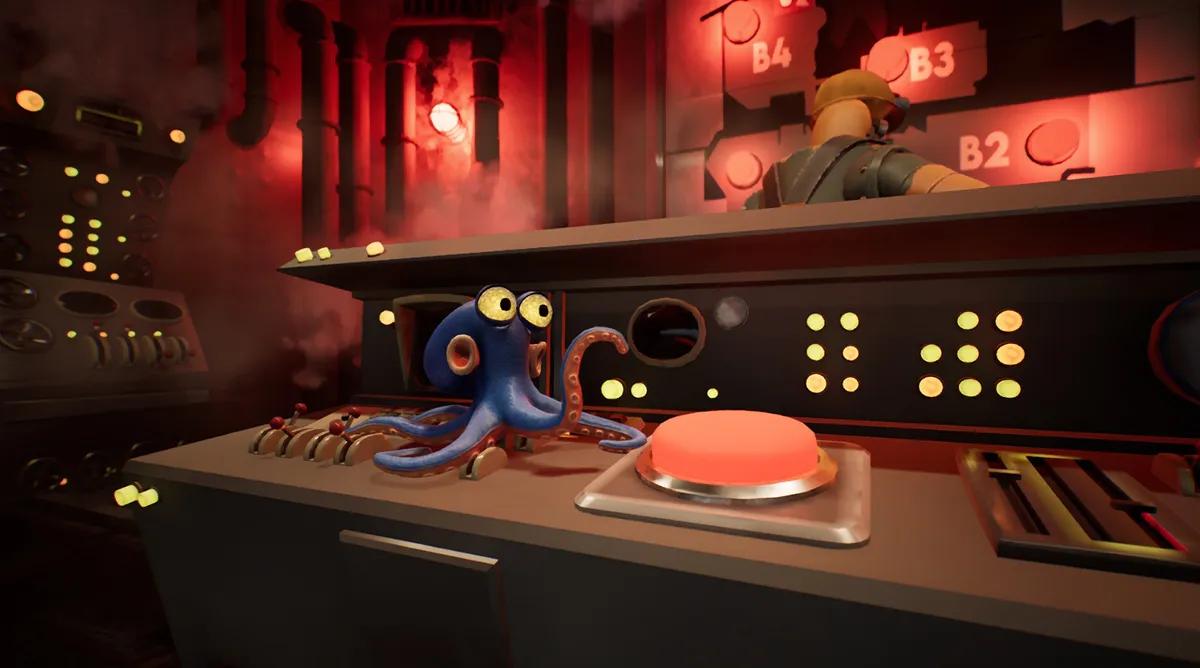
Darwin'in Paradoksu! Çizgi film tarzı bir cila ve bulmaca-platform oyunu vaadi sunuyor, sonra kendi gizlilik tuzağına düşüyor.










 Review
 Nintendo
 Steam
SteamDarwin's Paradox!, developed by ZDT Studio and published by Konami, releases April 2, 2026 on PlayStation 5, Xbox Series X/S, Nintendo Switch 2, and PC. The game follows Darwin, a small octopus dragged out of the ocean and deposited into a post-alien-invasion surface world where survival depends on climbing walls, solving environmental puzzles, and avoiding the gaze of alien invaders. Reviewers across outlets recognized a genuinely distinct visual identity and a platforming foundation with real potential, while identifying persistent frustrations in stealth-heavy level design and erratic difficulty management as the game's main structural problems.
A Cartoon World Built on Film-Grade Animation
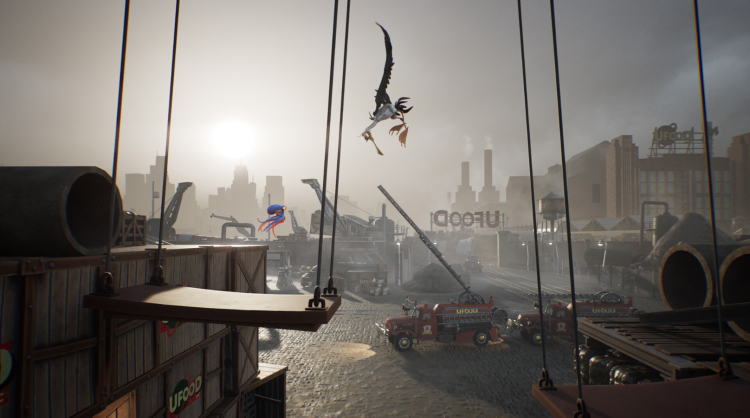
Darwin's Paradox! establishes its visual register from the opening underwater sequence, where the game teaches Darwin's abilities before the story pulls him to the surface. ZDT Studio renders the world with expressive character animation that multiple reviewers compared directly to Pixar and DreamWorks productions. Cinematic pre-rendered cutscenes carry movement quality that sits comfortably alongside mainstream animated film, and in-engine environments sustain dense visual detail across all locations Darwin passes through. The octopus himself communicates entirely through body language and facial expression — no character in the game speaks — which pushes the animation to carry narrative weight that dialogue would otherwise handle.
The story moves with wordless clarity through increasingly elaborate setpieces. Darwin gets swept up by the alien-fronted UFOODS corporation, escapes a seafood processing facility, navigates a sprawling alien-branded warehouse, and eventually moves between surface and underwater worlds in pursuit of a missing friend. The campaign runs approximately five hours. Konami's publishing fingerprints appear in specific details: Metal Gear Solid audio cues trigger when guards spot Darwin, collectibles include a movie poster for an alien Snake Plissken knock-off, and Darwin has an unlockable Solid Snake-inspired costume. Hidden paths in each level lead to newspapers and posters that add context about the human world around Darwin, rewarding exploration with exposition that the main story does not stop to provide. These collectibles sit behind the game's harder puzzles, which gives finding them purpose beyond simple completion.
The soundtrack does not match the visual presentation. Reviewers described the music as a generic pastiche of Hollywood orchestral scores that fails to reinforce the cartoon identity that the animation establishes clearly.
What the Platforming Gets Right
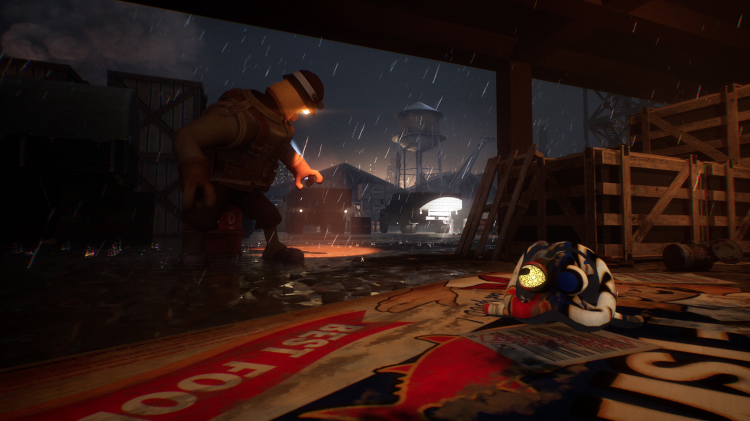
Darwin's core mechanical identity centers on surface adhesion. On land, he can climb walls, scale moving platforms, and navigate vertical spaces through most environments. Underwater, his toolkit expands to ink projectiles for hitting distant targets or generating cover clouds, and a camouflage ability that operates on both land and in water. The campaign structure withholds these abilities at the start — Darwin wakes up covered in mud that blocks his skills — and reintroduces them progressively, with wall-climbing receiving consistent use across most of the runtime. A few new abilities appear late, though reviewers noted the game largely works with a stable mechanical set rather than introducing major expansions.
The puzzle design evolves steadily. Each chapter adds new environmental logic: steam pipes that burn Darwin if he contacts the active ones, radioactive waste that repels rats but washes off if Darwin stalls, timed camouflage sequences where Darwin must stay entirely within shadow while moving between cover points. I find the methodical sections — where the game asks players to read an environment and string Darwin's abilities together — to be where Darwin's Paradox! functions best, giving wall-climbing and camouflage room to interact rather than operate in isolation. Reviewers across outlets agreed the puzzle design rarely stops progress cold, and that steady forward movement keeps pacing from stalling during the game's stronger stretches.
The wall-climbing mechanic does produce occasional friction. Darwin adheres to objects unintentionally, particularly inside tight spaces like pipes and air vents, leading to accidental deaths during sequences that demand precision. This stickiness matters more during fast-paced action sections than during deliberate puzzle-platforming, but it surfaces often enough that reviewers flagged it as a consistent minor irritant rather than an isolated issue.
Where Stealth Drains the Experience
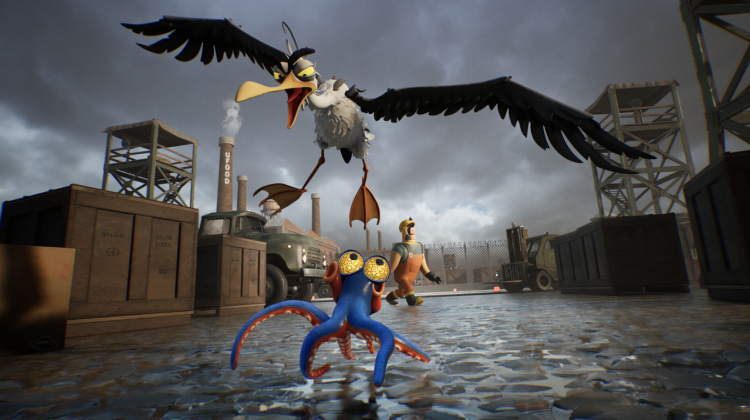
Stealth occupies a larger share of Darwin's Paradox! than its demo suggested. A mission roughly a third of the way through the campaign, set at night with guards carrying flashlights that visibly mark their detection range, functions as a preview of how the rest of the game operates. After that sequence, stealth becomes a recurring primary mechanic. The conditions that made the nighttime level readable — explicit, lit sightlines with clear geometry — do not persist. In subsequent levels, guards move through the 2.5D environment with unrestricted access to the full 3D space, and their vision cones require players to estimate rather than observe directly.
This produces a consistent design problem. Darwin can enter a room before the camera has repositioned, and a guard can register him before the player has any information about where the guard is standing or which direction it faces. When stealth does work — Darwin times camouflage use correctly, reads a guard's pattern, moves through a space cleanly — reviewers found the result dull rather than satisfying. The light tone removes the tension that gives stealth mechanics stakes in other games. Waiting for a spotlight to pass or a guard to turn its back is a passive action, and the Metal Gear references in the sound design only highlight the distance between what the mechanic references and what it delivers. I spend more time in these sequences watching movement patterns than acting on them, waiting for a window rather than creating one.
Some stealth sections layer additional mechanics on top of the sightline uncertainty. One requires Darwin to navigate past sound-detecting machines while hiding in underwater brush and avoiding spotlights simultaneously. Reviewers described this combination as disproportionately punishing relative to what preceded it. The game's hint system, available when players stall, offered clues that amounted to reminders to use the dash button or observe surroundings — guidance too vague to address the specific problem the player was stuck on.
Gimmick Levels and Difficulty Spikes
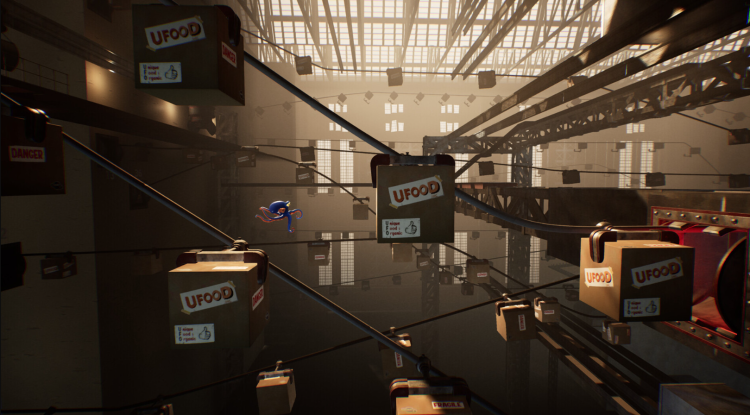
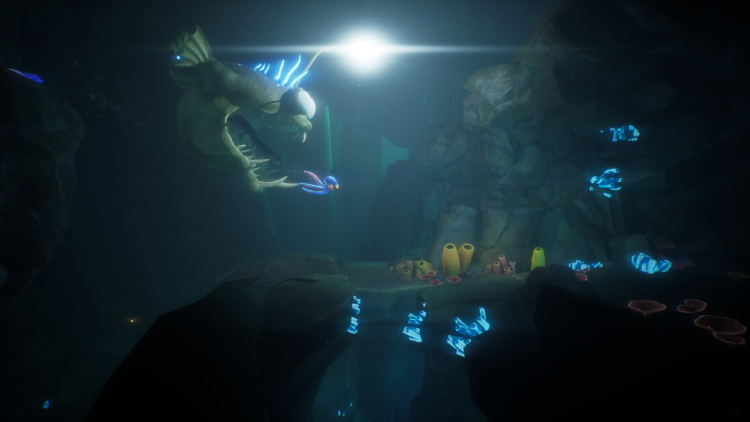
Beyond stealth, Darwin's Paradox! introduces level-specific mechanical gimmicks that reviewers identified as the game's most inconsistent territory. One level puts Darwin inside a robot suit governed entirely by momentum. Reaching a walking speed requires sustained input over time, and stopping requires as much lead time as decelerating a vehicle at speed. The mechanic produces frequent deaths from pits and operates in direct conflict with the movement logic the game spends its first hours establishing. A separate level requires Darwin to outrun an anglerfish that kills him instantly if he slows, forcing trial-and-error through a tense action sequence until the correct path is identified through repeated failure.
Reviewers drew a comparison to licensed movie tie-in games — levels that seem to recreate set pieces from an animated film that does not exist, included because the concept appeared to demand them rather than because the game's design accommodated them naturally. The robot suit and chase sequences read that way: obligatory spectacle rather than mechanical extension. The contrast between these sections and the puzzle-platforming that surrounds them makes the inconsistency more visible than it might be in a game with less coherent foundations.
Standard difficulty spikes appear without the preceding sections building toward them. Some encounters become abruptly strict about timing or detection after a stretch of more forgiving design. The gap between Darwin's Paradox! at its most evenly paced and its most frustrating is wide enough that the experience shifts character depending on which section is active.
Technical Performance and Platform Differences
Darwin's Paradox! arrives across four platforms with performance varying significantly by version. The Switch 2 release targets 30 frames per second and generally holds it, but graphical quality has been substantially reduced from the PlayStation 5 and PC versions. The film-like quality that reviewers cited as the game's most consistent strength is visibly diminished on Switch 2. Framerate hitches during area transitions, including during some of the faster action sequences, compound the issue at the moments where consistent performance matters most. Pre-release PC testing showed hardware equipped with an RTX 3070 failing to sustain a consistent 60 frames per second on the demo build, which contextualizes the Switch 2 reduction in part, though reviewers noted that other small-scale titles have achieved closer graphical parity with their PC and PlayStation versions on the same hardware.
The game includes an accessibility function on collectible newspapers and posters that renders visible text as plain text on a black background, intended to support players reading in languages other than English, since only the plain text version is translated. The implementation is inconsistent. Some newspapers omit more than half their article text in the plain text output. Some posters describe the pictured artwork without transcribing visible text, while others add jokes present only in the plain text description that do not appear in the image itself. At least one collectible delivered a plain text version that was almost entirely blank. Reviewers noted a typo visible in one collectible image that did not appear in the plain text version. For players in non-English languages, the incomplete plain text means they are receiving a degraded version of content that the game treats as a meaningful reward.
Verdict
Darwin's Paradox! is an 8/10 game.
Darwin's Paradox! lands as a game that demonstrates genuine craft in its strongest sections and genuine imbalance in its weakest ones. ZDT Studio built a visual identity that stands apart in the cinematic platformer genre, and the wall-climbing and puzzle-platforming mechanics, when given space to operate, justify the comparison to Little Nightmares that reviewers reached for as a reference point. The stealth mechanics undercut that foundation across much of the runtime, and the gimmick levels widen the distance between what Darwin's Paradox! does well and what it does out of apparent obligation. The result is a five-hour campaign that alternates between those two modes without resolving the tension between them.


 Başarıyla kopyalandı... İçeriğimizi paylaştığınız için teşekkür ederiz!:



100 mücevhere kadar %5 para yatırma bonusu

Para yatırma ve çekme işlemlerinde %0 ücret.





11 Para Yatırma Bonusu + FreeSpin


EKSTRA %10 PARA YATIRMA BONUSU + ÜCRETSIZ 2 ÇARK DÖNDÜRME

Ücretsiz Kasa ve %100 Hoş Geldin Bonusu


5 Ücretsiz Kılıf, Günlük Ücretsiz ve Bonus

3 ücretsiz kasa ve tüm nakit para yatırma işlemlerine %5 bonus eklenir.

Depozitoya +%5




Yorum