




Dinoblade 83.000 Kopya Sattı ve Geliştiricisi Hala Sucker Punch'ta Çalışıyor










 Steam
SteamJean Nguyen animates for a living at Sucker Punch, where he worked on Ghost of Yotei. He also spent about three years building a dinosaur action RPG in his evenings, announced last year with a Steam demo, and released it in July. It sold 36,000 copies in the first 24 hours.
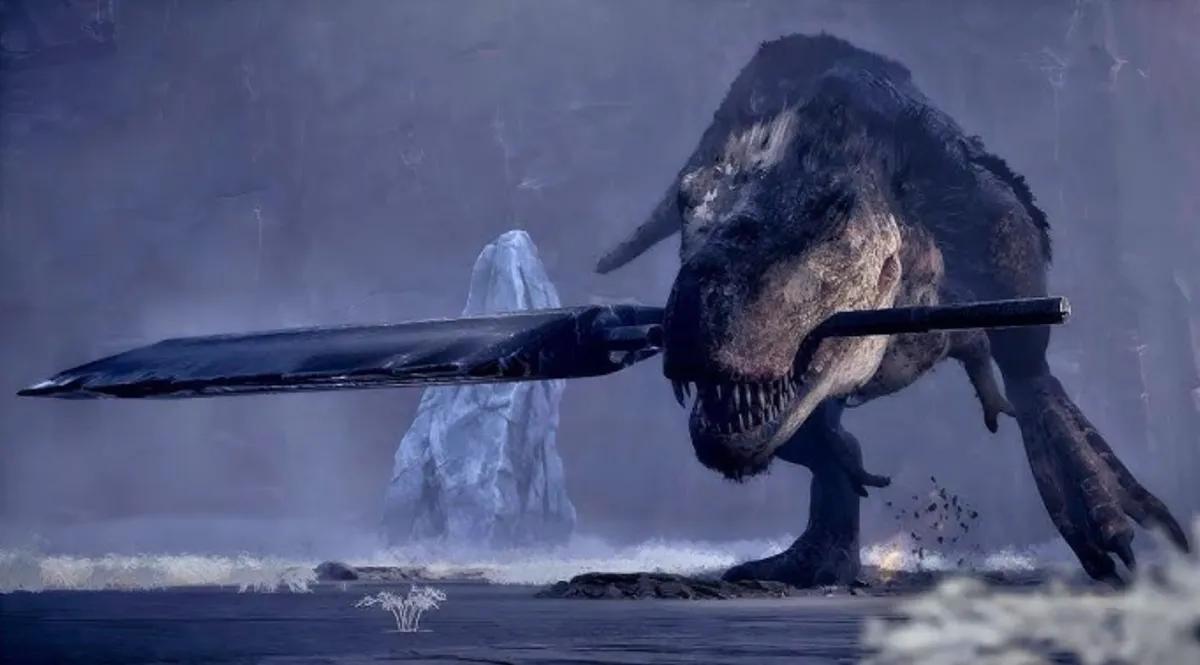
Dinoblade on Steam puts you inside a young Spinosaurus that fights with a greatsword held in its jaws, in a prehistoric world reshaped by a cataclysm, against rival dinosaurs that are sometimes armed too. It grew out of a viral animation demo of a sword-wielding spinosaurus, which is also what convinced Nguyen the idea was worth building at all. The game went into launch with more than 600,000 Steam wishlists and hit Very Positive within a day, with 89% of its first 562 reviews positive.
A week later, it had moved 83,000 copies at 90% positive across 1,700 reviews. Nguyen has already shipped a patch for controller issues, plans to keep supporting the game, and says he will consider a direct sequel or a looser follow-up once the launch settles. He is open to going full-time and starting a studio at some point, but describes the whole thing as closer to a hobby than a career.
None of it would exist without a signature. Nguyen had to get his side project cleared through Sucker Punch's legal department first, and the terms he came away with are unusually good.
"I still own the IP 100%"
— Jean Nguyen
He says the studio has supported other employees the same way, and that as long as his day job does not slip, nobody minds. He also knows how rare that is, describing himself as lucky to be somewhere that allows it when most studios do not.

Game Developer published a report the same week on side work clauses, the contract terms that restrict or forbid what developers can build on their own time. Unionising workers at Wizards of the Coast described theirs in May as overly broad, saying approval requests get blanket denials or sit unanswered for long stretches, and that the burden of sorting it out, including any legal advice, falls entirely on the worker.
One anonymous developer with experience across major triple-A studios told Game Developer the clauses are everywhere, that paperwork is required every time, and that approval almost never comes, not because anything needs protecting but because employers do not want the complication. Some are drawn widely enough that talks, panels, guest teaching and even mentoring count as conflicts of interest.
"I have been hunted down by HR reps, lawyers, and comms people"
— an anonymous developer
Alice Ruppert negotiated the clause out of both full-time contracts she has signed, once by narrowing it to the specific type of game her employer made, once by signing a declaration of outside interests that laid out what she would be doing after hours. Her advice is to ask for removal or at least for tighter wording, since the conversation happens after the employer has already decided to hire you. Art director Louise Meijer-Åström got a verbal assurance instead, then heard in passing that her CEO was unhappy about the world-building project she had been posting online. The meeting she requested turned uncomfortable, she was told she was not being loyal, her request for a written exception was refused, and she paused the hobby work, stopped running the internal learning sessions she had built out of it, and left for another studio. Her own observation from managing artists is that the ones creating in their spare time were consistently her high performers.
US employment lawyer Wendy Stryker says that where the side project is the same work you are employed to do, the clauses are generally enforceable no matter whose kitchen table it happens on. A completely different genre and market gives an employee more room, but she still recommends getting a written exception, and her short version is to disclose and get permission. She also acknowledges that in an industry laying people off at the current rate, most workers have very little leverage to negotiate with, which is why some simply build things quietly and keep the credits off their public record.
In the Psychonauts 2 documentary, then Xbox Game Studios head Matt Booty fielded questions from Double Fine staff after the 2019 acquisition and told them to worry only about work that competes with what the studio does, adding that once something is inside those walls, Double Fine owns it. Tim Schafer explained that the studio ran a fortnightly process where employees pitched personal projects, and anything not picked up stayed theirs. Booty said that arrangement could not survive under Microsoft, calling it a messy boundary because a rejected idea might be revisited later.
Set against all of that, what Nguyen actually did is almost boring. He watched Unreal Engine tutorials, put in 5 to 15 hours a week for roughly three years, and leaned early on the maker of Combat Fury, an Unreal combat framework. He paid contractors to model the key story bosses so they would not look like marketplace assets, commissioned music, and got animation and QA help from his brother. I am building my own side project in the evenings right now with tools I am learning as I go, and the number that stuck with me is not the 83,000 copies; it is 5 to 15 hours a week for three years before any of it paid off.
No meetings, his own vision, and permission to try things too risky to survive a group decision, which he treats as the only way a small game competes with polish it cannot match. I think the load-bearing part of this story is that an employer chose to allow it, and the reporting suggests most would not have.
Sucker Punch has had a stranger year than its animator. Ghost of Yotei sold 3.3 million copies in its first month, then the studio moved to end Ghost of Yotei support for the Legends multiplayer mode after The Raid update, roughly two months in, where Ghost of Tsushima's version of Legends ran for about a year and a half. Yotei’s PC release, reported as extremely far along with a 2026 target, was scrapped after Sony changed its strategy on porting exclusives. And a cut feature inspired by The Legend of Zelda: Breath of the Wild, free climbing, was prototyped and dropped because the world was full of walls players were not meant to scale, and co-directors Nate Fox and Jason Connell decided that finding nothing at the top would simply train people to stop climbing.
That last one is the decision I would defend hardest, because a traversal system that rewards nothing teaches players to ignore the map. It is also the kind of call that only gets made when a team has room to prototype and throw things away, which is exactly the room a side work clause takes off an individual. Nguyen got his three years because somebody signed a form. The story worth telling is not that he made a good game on nights and weekends. It is that he needed permission to try.


 Başarıyla kopyalandı... İçeriğimizi paylaştığınız için teşekkür ederiz!:



100 mücevhere kadar %5 para yatırma bonusu

Para yatırma ve çekme işlemlerinde %0 ücret.





11 Para Yatırma Bonusu + FreeSpin


EKSTRA %10 PARA YATIRMA BONUSU + ÜCRETSIZ 2 ÇARK DÖNDÜRME

Ücretsiz Kasa ve %100 Hoş Geldin Bonusu


5 Ücretsiz Kılıf, Günlük Ücretsiz ve Bonus

3 ücretsiz kasa ve tüm nakit para yatırma işlemlerine %5 bonus eklenir.

Depozitoya +%5




Yorum