




Unutulmuş PS1 Grinch Oyunu, Hala Yanlış Giden Bir Sahneyle Son Buluyor










 Oyunlar
 PlayStation
The Grinch resurfaces every December in stores and on screens, but one of its strangest appearances came quietly in 2000 through a licensed video game that most players never finished. Released alongside Jim Carrey’s live-action film, The Grinch launched on PlayStation, Sega Dreamcast, and Windows PC with little attention and less affection. Two decades later, its ending has gained a second life online for reasons the original developers likely never intended.
The Grinch was published by Konami in November 2000 as a tie-in timed to the movie’s theatrical run. The premise stayed close to the source material. The Grinch misplaces his blueprints for stealing Christmas and tears through Whoville trying to recover them, smashing decorations, stealing gifts, and sabotaging holiday cheer. The game framed this destruction as slapstick mischief, softened for younger players and padded with simple platforming objectives.
Commercially, it went nowhere. The Grinch reportedly sold around 20,000 copies, a weak result even by the standards of licensed games at the time. Critical response landed in the middle-to-low range, with reviewers citing repetitive objectives and clumsy mechanics. GamePro summed up the general reaction in a short verdict that followed the game for years.
“While a scant few of The Grinch's tasks are fun, the rest are either boring, frustrating, or both.”— GamePro
With review scores hovering near 5 out of 10, the game faded quickly. Few players reached the ending, and fewer still had reason to revisit it. That obscurity is precisely why its final scene now feels so jarring when resurfaced through modern clips and streams.
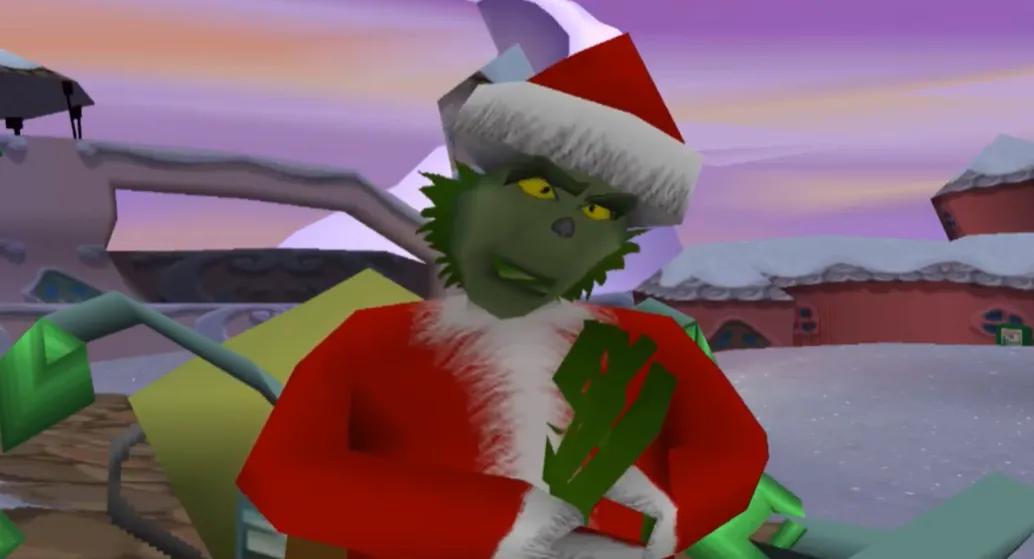
As the game concludes, the Grinch undergoes his expected transformation. He begins to feel affection for Christmas and for the residents of Whoville. Delivered in a strained Jim Carrey impression, the moment plays out with exaggerated sincerity as he announces his change of heart and returns the stolen gifts by sleigh. He scatters them across the town square and asks forgiveness from the Whos gathered below.
What follows abandons charm entirely. Cindy Lou Who steps forward and invites him to join the celebration.
“Come and sing with us!”— Cindy Lou Who, The Grinch (2000)
Rendered with early-2000s low-polygon models, the scene locks into an uncanny tone. Characters sway stiffly. Mouths barely move as voices play over them. Facial features clip through each other, with teeth passing through noses and arms bending like loose ribbons. The Whos sing without animation, their expressions frozen in wide-eyed smiles. The game cuts to black without resolving the discomfort it creates.
By modern standards, the scene reads less as a festive ending and more as an accidental horror vignette. The technical limitations of the era collide with a tone that demands warmth and sincerity, producing something hollow and unsettling instead. The effect is heightened by the sudden stillness of the characters and the absence of proper lip-syncing, which leaves the singing feeling detached from the bodies on screen.
The ending remained largely unseen until players began posting footage online. Social media users resurfaced the scene years later, framing it as one of the strangest finales hidden inside a children’s game. For many viewers, this was their first exposure to the title at all.
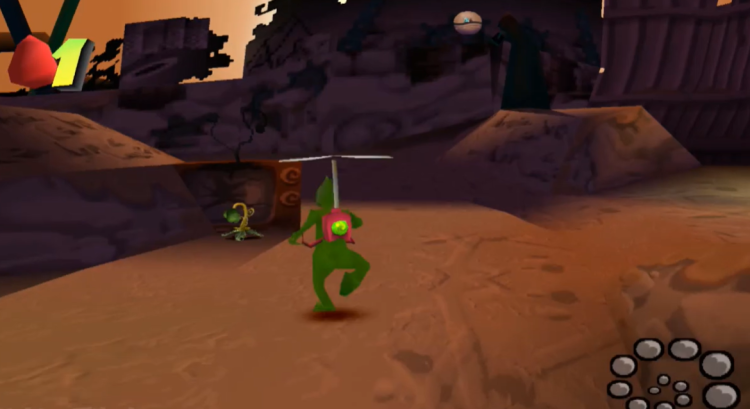
There was more buried beyond the standard ending. Players who fully completed the game unlocked a bonus finale that leaned into absurdity rather than discomfort. This alternate ending grants the Grinch a motorcycle and unlocks a racing minigame set in Whoville, complete with cartoonish physics and little narrative justification. It stands in sharp contrast to the main ending’s eerie stillness, offering motion and spectacle instead of static smiles.
That bonus content was even less likely to be seen. Completing the game to 100 percent required persistence few were willing to give, especially given the lukewarm reception and repetitive design. The result is a reward experienced by a tiny handful of players and later preserved through video uploads rather than memory.
The renewed interest in the PS1 Grinch game reflects a broader pattern in how forgotten licensed titles are reevaluated. Many were rushed to market, built under strict deadlines, and discarded once their promotional window closed. Their technical flaws were once unremarkable. With distance, those flaws now stand out sharply, especially when paired with familiar characters meant to evoke comfort or nostalgia.
In the case of The Grinch, the mismatch between intent and execution is what lingers. A scene designed to resolve a moral arc instead exposes the fragility of early 3D character animation. What should have been warmth turns rigid. What should have been joy becomes unsettling silence between movements.


 Başarıyla kopyalandı... İçeriğimizi paylaştığınız için teşekkür ederiz!:



100 mücevhere kadar %5 para yatırma bonusu

Para yatırma ve çekme işlemlerinde %0 ücret.





11 Para Yatırma Bonusu + FreeSpin


EKSTRA %10 PARA YATIRMA BONUSU + ÜCRETSIZ 2 ÇARK DÖNDÜRME

Ücretsiz Kasa ve %100 Hoş Geldin Bonusu


5 Ücretsiz Kılıf, Günlük Ücretsiz ve Bonus

3 ücretsiz kasa ve tüm nakit para yatırma işlemlerine %5 bonus eklenir.

Depozitoya +%5




Yorum