




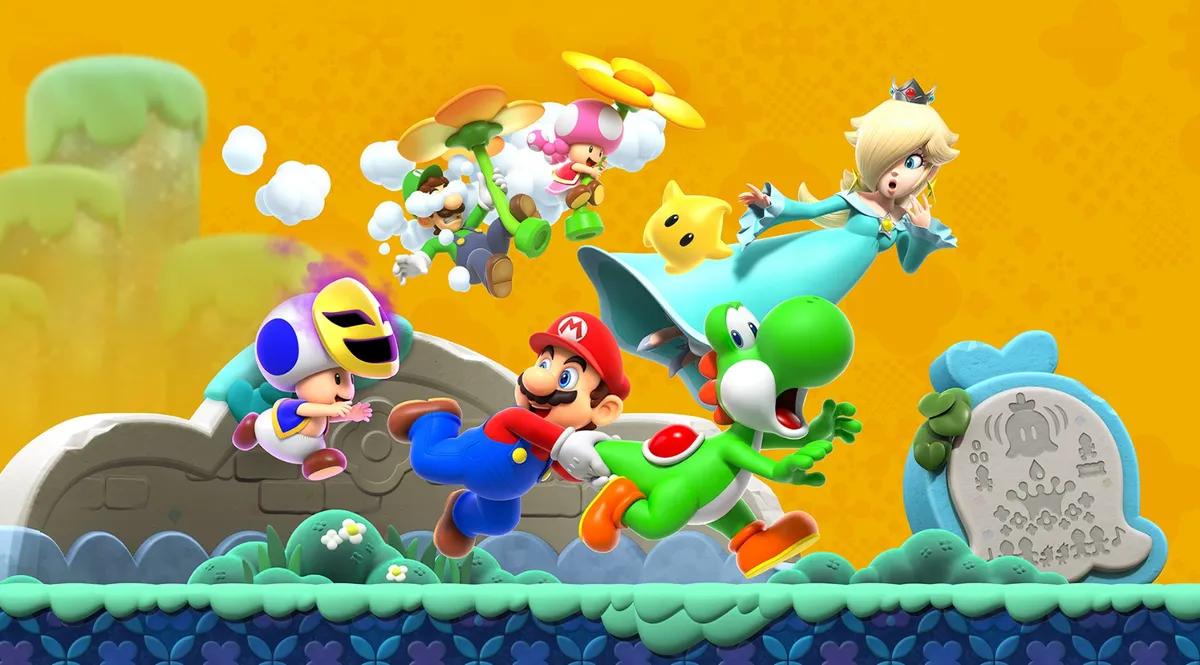
Super Mario Bros. Wonder - Nintendo Switch 2 Sürümü + Bellabel Park Buluşması İncelemesi










 Nintendo
 Review
Super Mario Bros. Wonder arrives on the Nintendo Switch 2 with expanded technical capabilities and a substantial collection of new gameplay modes centered around the Bellabel Park hub. This edition integrates the original 2023 campaign with a series of high-difficulty boss encounters, specialized training missions, and a dedicated multiplayer pavilion. Players transitioning from the previous hardware can import existing save data to access the new content immediately upon clearing the initial stages of the main story. The package functions as both a comprehensive re-release for new owners and a targeted expansion for returning fans seeking mechanical refinement.
Technical Performance and Visual Upgrades on Switch 2 Hardware
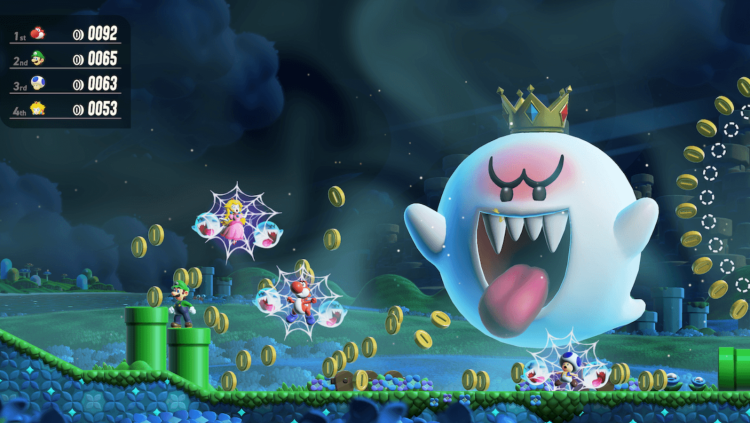
The transition to more powerful hardware allows the Flower Kingdom to render at a native 4K resolution while maintaining a consistent 60 frames per second during docked play. This resolution increase provides higher clarity for the expressive character animations and detailed background layers that define the visual identity of the original game. Water effects and lighting transitions in the deep-sea levels exhibit improved stability compared to the original hardware performance. Framerate drops previously observed during complex boss encounters, such as the underwater conflict with Bowser Jr., are absent in this version. The increased processing power ensures that even with four players and multiple Wonder Effects active simultaneously, the game maintains its target performance metrics.
Texture density on environment assets appears sharper, particularly during the close-up animations triggered by the Elephant Fruit transformation. The vibrant color palette of the various worlds benefits from the higher output resolution, making the distinct art style of each region more prominent on high-definition displays. Load times between the world map and individual stages have been reduced, allowing for faster navigation through the sprawling environments. These technical enhancements establish a baseline for the platforming experience that remains fluid regardless of the number of on-screen entities or particle effects. The game maintains these performance standards in handheld mode, providing a visual experience that surpasses the capabilities of the first-generation console.
The Resurrection of the Koopalings and Wonder Power Boss Battles
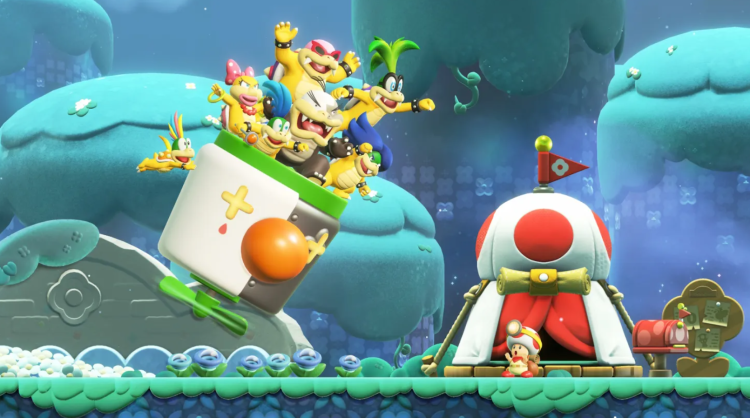
Nintendo addresses previous critiques regarding boss variety by introducing the seven Koopalings as primary antagonists within the expansion. These characters are introduced early in the campaign and infused with Wonder Power, leading to encounters that deviate from the traditional three-hit combat cycle. Wendy O. Koopa transforms into a large Cheep Cheep and utilizes portals to summon waves of enemies into the arena. Morton Koopa Jr. shifts into an enormous puppet and attacks from the background, forcing players to manage vertical positioning and timing. These battles are scattered across the Flower Kingdom map and are accessible through Captain Toad’s Brigade Tents. Each encounter features a unique gimmick tied to the specific Wonder Power possessed by the Koopaling, creating mechanical variety that necessitates different tactical approaches. The difficulty of these fights scales as players progress through the game, with later versions requiring precise execution of jumping and badge abilities.
I find the final boss fight against Bowser in the base game underwhelming compared to the complexity found in these new Koopaling confrontations. The boss stages themselves serve as elaborate obstacle courses that lead into the final arena, integrating platforming challenges with the eventual combat. Defeating these bosses contributes to the collection of Bellabel Flowers, which are necessary for unlocking further content within the Bellabel Park hub. This structured progression provides a definitive endgame goal for players who have already completed the standard campaign.
New Power-Ups and Expanded Playable Character Roster
The Super Flower Pot serves as the primary mechanical addition to the power-up arsenal in this edition. This item allows characters to launch projectiles vertically, effectively clearing enemies like Lakitus that occupy the upper portions of the screen. The power-up also grants a flutter jump ability similar to Yoshi, providing additional air time for navigating complex platforming sequences. Rosalina joins the playable roster to coincide with her appearance in the upcoming Super Mario Galaxy Movie, offering another aesthetic option for players. While her movement stats remain consistent with characters like Mario and Luigi, her inclusion provides visual variety for long-term players. Luma acts as a secondary assist character, capable of collecting distant items and defeating smaller enemies to simplify the experience for less experienced players. This character functions as a cooperative tool, allowing a second player to contribute to the progression without the high stakes of standard platforming.
An optional assist mode provides invulnerability for any character, ensuring that younger players or those focused on exploration can navigate difficult levels without frustration. These additions do not alter the fundamental physics of the game but provide more tools for interacting with the environment. The Super Flower Pot power-up is featured prominently in several of the new challenge levels, requiring players to master its vertical trajectory to proceed. These mechanical updates integrate seamlessly with the existing power-up system, offering new solutions for existing environmental puzzles.
Toad Brigade Training Camp and High Difficulty Challenges
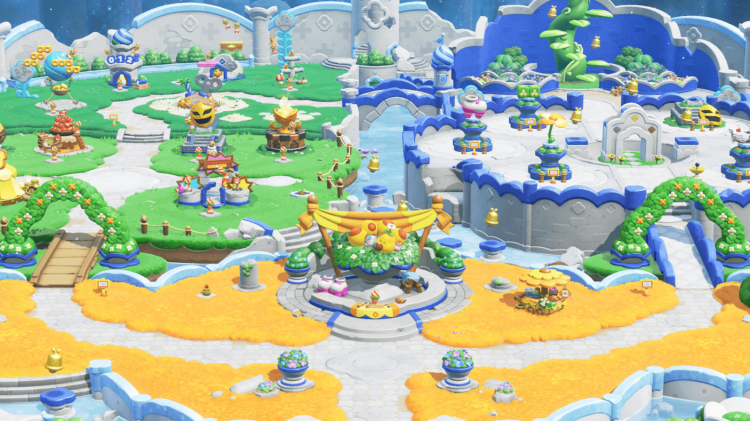
The Toad Brigade Training Camp introduces over 70 bite-sized missions designed to test high-level platforming skills. These missions are categorized by specific completion criteria, such as reaching the goal without collecting a single coin or avoiding all enemy contact. Some challenges incorporate the new Dual Badges, which combine two existing abilities like Invisibility and the Grappling Vine for complex traversal. Time-limited trials require players to speedrun through familiar stages with reduced margins for error. Starpoint speedruns force players to maintain a constant pace while navigating paths dictated by moving power-ups. The difficulty of these missions is denoted by a star rating, with the final tier of challenges offering a significantly higher level of resistance than the main campaign.
I think this is the best lineup of bosses in any 2D Mario game when combined with the rigorous requirements of these training missions. Players must often experiment with different badge combinations to find the most efficient route through a given challenge. Completing these missions rewards the player with Bellabel Water, a currency used to decorate the Bellabel Park hub and unlock new features. The variety of these challenges ensures that players must master all aspects of the movement system, from precise wall jumps to the timing of air spins. This content serves as a dedicated endgame for veteran players who have exhausted the secrets of the original Flower Kingdom.
Attraction Central and Multiplayer Integration in Bellabel Park
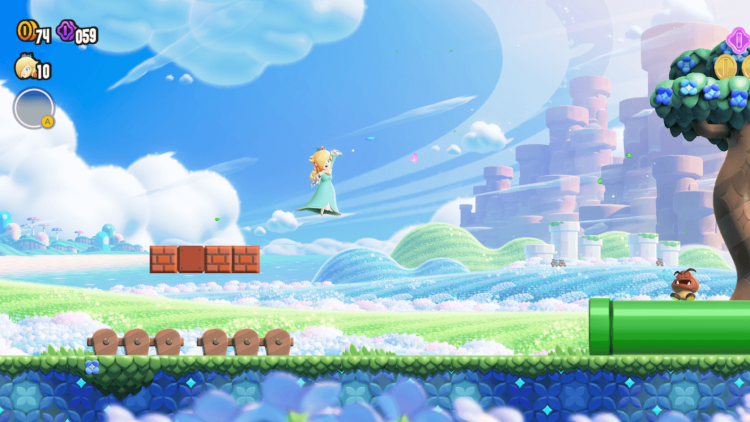
Bellabel Park functions as the central hub for all multiplayer activities, divided into local and online sections. Attraction Central houses a collection of minigames that recontextualize the core platforming mechanics into competitive and cooperative formats. Phanto Tag operates as a hide-and-seek mode where players disguise themselves as environmental objects like coins or Talking Flowers to evade seekers. Baby Yoshi feeding games require players to collect fruit and manage resources under a time limit. The cooperative mode Fly Free, Captain Toad tasks two players with controlling a single unit, where one manages horizontal movement and the other handles jumping and fluttering.
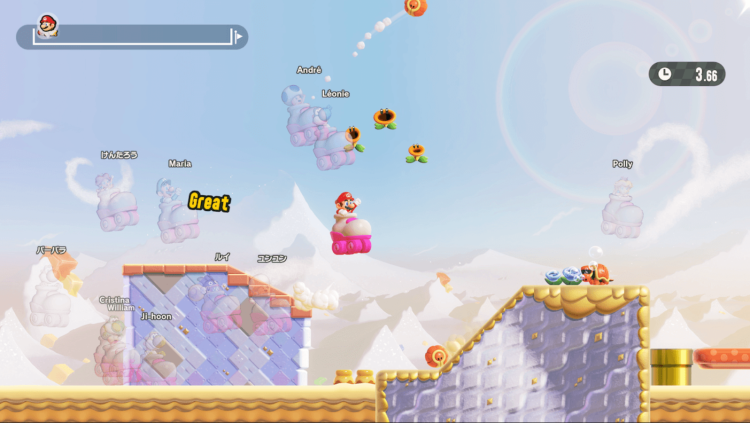
Local multiplayer benefits from new camera options, including a zoomed-out view that provides a wider perspective of the level. This adjustment reduces the chaos associated with four-player sessions and allows for better coordination during complex platforming sections. Online play supports up to 12 players in certain attractions, though these modes are currently limited to friends-list interactions. The competitive games include races on propeller flowers and roller skates, emphasizing speed and navigation over direct combat. Players earn Bellabel Water through participation in these events, which can be used to unlock members of the Poplin Band. This currency loop encourages regular engagement with the multiplayer suite while providing tangible rewards for the single-player experience.
Quality of Life Refinements and Campaign Adjustments
Several structural changes address specific friction points found in the original release of Super Mario Bros. Wonder. The camera system now includes an option to remain fixed on Player One, preventing the perspective from shifting to less experienced players during local co-op. Off-screen players who fall behind can now be set to automatically warp back to the lead player, eliminating the need for manual revival as a ghost. These settings are accessible from the main menu and can be toggled at any time to suit the skill level of the party. The inclusion of Dual Badges allows players to equip two powers simultaneously, such as combining the Parachute Cap with the Dolphin Kick for improved mobility in both air and water.
Save data from the original Switch version transfers automatically, ensuring that returning players can access Bellabel Park without replaying the initial campaign. The game also features an updated voice actor for the Talking Flower to maintain consistency with other current Nintendo titles. For those who prefer the original experience, the Switch 1 version of the campaign remains accessible through the main menu, including its original online functionality. These refinements streamline the cooperative experience and provide more flexibility in how players approach the game's various challenges. The integration of these features makes the Nintendo Switch 2 Edition the most technically polished and feature-complete version of the title to date.
Verdict
Super Mario Bros. Wonder - Nintendo Switch 2 Edition + Meetup in Bellabel Park provides a comprehensive technical upgrade and a meaningful expansion of the original gameplay loop. Super Mario Bros. Wonder - Nintendo Switch 2 Edition + Meetup in Bellabel Park is a 9/10 Switch 2 game.
Pros:
- The 4K resolution and 60fps performance provide the definitive visual experience of the Flower Kingdom.
- Koopaling boss battles and Toad Brigade challenges offer a high level of difficulty for veteran players.
- Multiplayer refinements like the wide camera and auto-warp mechanics significantly improve the local co-op experience.
Cons:
- The $80 price point for the full package remains high for returning players.
- Online multiplayer attractions lack depth and are restricted to friend-list interactions.
The Nintendo Switch 2 Edition successfully modernizes the 2023 release while adding content that justifies a return to the Flower Kingdom. The addition of complex boss fights and specialized training missions addresses the previous lack of endgame challenges. It establishes a high standard for enhanced re-releases on the new hardware through its combination of technical polish and mechanical expansion.


 Başarıyla kopyalandı... İçeriğimizi paylaştığınız için teşekkür ederiz!:



100 mücevhere kadar %5 para yatırma bonusu

Para yatırma ve çekme işlemlerinde %0 ücret.





11 Para Yatırma Bonusu + FreeSpin


EKSTRA %10 PARA YATIRMA BONUSU + ÜCRETSIZ 2 ÇARK DÖNDÜRME

Ücretsiz Kasa ve %100 Hoş Geldin Bonusu


5 Ücretsiz Kılıf, Günlük Ücretsiz ve Bonus

3 ücretsiz kasa ve tüm nakit para yatırma işlemlerine %5 bonus eklenir.

Depozitoya +%5




Yorum