




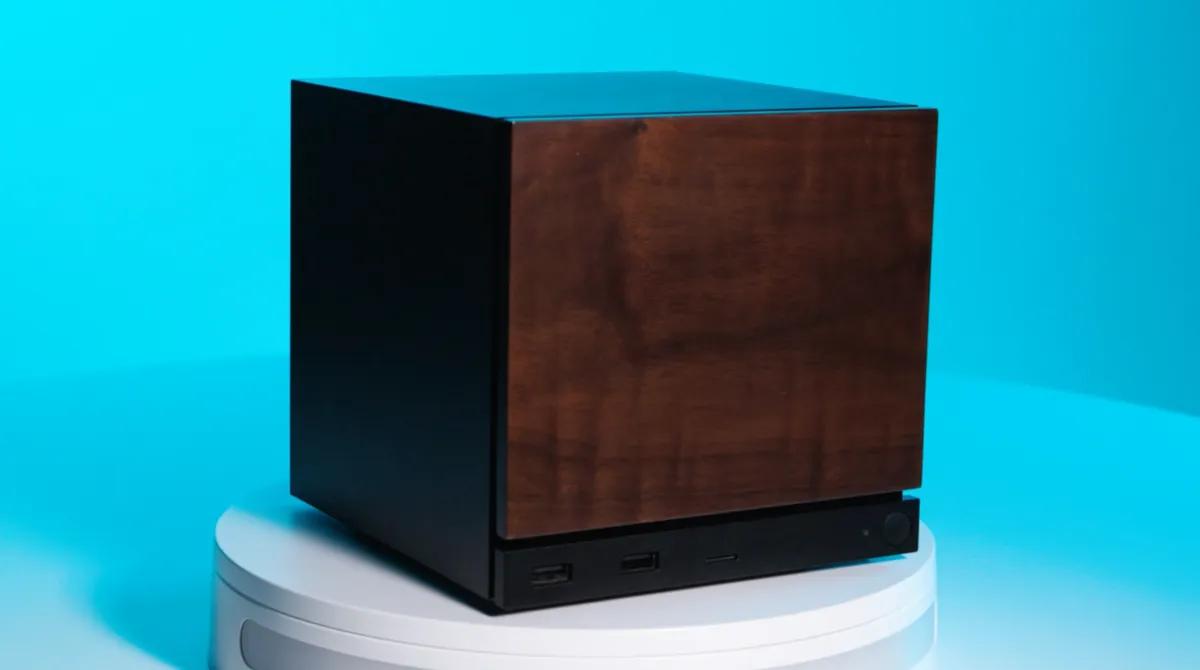
Valve, buhar makinesinin işinin %99'unu buhar güvertesinin yaptığını söylüyor.










 Valve
Valve Steam
SteamMost of the engineering behind the Steam Machine was finished before the project formally started, according to the two Valve engineers who built it. Pierre-Loup Griffais and Yazan Aldehayyat told PC Gamer that the living-room PC inherited the bulk of its foundation from the Steam Deck, leaving a narrow set of new problems to solve.
Griffais broke those problems down to the parts unique to a desktop-class box: the discrete GPU, VRAM management, and ray tracing performance. Outside those, he put the overlap between the two platforms at nearly total.
"The other 99% of the work already done in a sense."
— Pierre-Loup Griffais
Aldehayyat said the use case proved itself before Valve wrote any Steam Machine code. People were already docking Steam Decks to their TVs and getting a good experience without Valve doing anything specific for that setup. He described it as almost validated in advance.

The Steam Deck did not arrive clean. Valve shipped it in 2022 into stock shortages, and the hardware carried a whiny fan, stick drift traced to a software problem, and a buggy dock. Valve kept patching, and those issues were largely resolved over the following years. Griffais tied the Steam Machine to that same method, pointing back to the original Steam Controller and Steam Input as the start of a single line of work the company kept extending.
"We tend to want to work like that—incremental steps that always add up. When we worked on Steam Input, and just input stuff in general, the Steam Controller, we were solving and kinda thinking around a lot of the same issues that we were trying to solve with Steam Deck."
— Pierre-Loup Griffais
The Steam Machine still hit its own walls. Valve feared a repeat of the 2022 stock problems at the start of this year, and the memory supply crisis pushed component costs up across the project. Making the box cheaper topped the list of things the engineers said they would change. They originally aimed for the Steam Machine to cost 30 to 35 percent less, which would have landed the base model near $750 before supply conditions forced it higher.
On a follow-up product, Valve drew a clear line between the two platforms. Griffais said the Steam Deck needs a fixed performance target so developers and players can answer one question: what runs on it. That picture can't shift every year or two without breaking the expectation. The Steam Machine works differently.
"The Steam Deck, by its nature, needs a little bit more of a fixed performance target for both developers and users to make sense of, 'What can I play on this?' and not have that picture change once every year, every two years. Whereas the Steam Machine is very much in line with gaming PCs."
— Pierre-Loup Griffais
That framing places the Machine on the same gradient as any desktop, from low-end CPUs at one end to high-end CPUs and GPUs at the other. A five-year fixed target matters less for a product built that way, since PC owners already accept that hardware spans a wide range of power. Aldehayyat tied the slower cadence to how PC gamers behave now, pointing to a longer upgrade cycle that extends how long the Machine stays viable. A box launching today, he argued, lasts longer than one shipped ten years ago would have, because owners swap parts less often.

I run a Steam Deck that still handles most of my library four years in, so I read Valve's refusal to commit to a sequel date as a fair account of how people use this hardware rather than a stall. The trigger for a refresh sits outside the company's control.
"It's just a matter of when it makes sense to, at what price point, at what time, on what games are available. Like if a bunch of new games come out on Steam that require more performance, that would probably make us wanna upgrade the Steam Machine faster."
— Yazan Aldehayyat
Until demanding titles arrive on Steam, the current Machine stays in line with typical PC upgrade habits. Valve is also watching the next console generation and the RAM shortage, which may run until 2028. I think the engineers are being straight about the gap rather than hiding a roadmap, since they kept returning to questions about the new systems generation they cannot yet answer. A Steam Machine sequel is, in their words, just a matter of when it makes sense. Valve has separately said it is working on a Steam Deck 2 without naming a date, and that the Steam Machine won't track those handheld milestones.
The Steam Machine launches as a PC that ages like a PC, with new specs arriving when price, timing, and game requirements line up rather than on a set calendar.
Read also, the Steam Machine's first competitor: French retailer LDLC's PC Box, which pairs a Ryzen 5 8400F with a Radeon RX 9060 XT for more frames than Valve's box, but ships larger, louder, and without SteamOS installed.


 Başarıyla kopyalandı... İçeriğimizi paylaştığınız için teşekkür ederiz!:



100 mücevhere kadar %5 para yatırma bonusu

Para yatırma ve çekme işlemlerinde %0 ücret.





11 Para Yatırma Bonusu + FreeSpin


EKSTRA %10 PARA YATIRMA BONUSU + ÜCRETSIZ 2 ÇARK DÖNDÜRME

Ücretsiz Kasa ve %100 Hoş Geldin Bonusu


5 Ücretsiz Kılıf, Günlük Ücretsiz ve Bonus

3 ücretsiz kasa ve tüm nakit para yatırma işlemlerine %5 bonus eklenir.

Depozitoya +%5




Yorum